Certification Number
005
Category
Category
Location
2-1 Hirosawa, Wako City, Saitama Prefecture, on the grounds of the RIKEN Research Institute
Owner/Administrator
National Research and Development Agency, RIKEN
Scope and Content
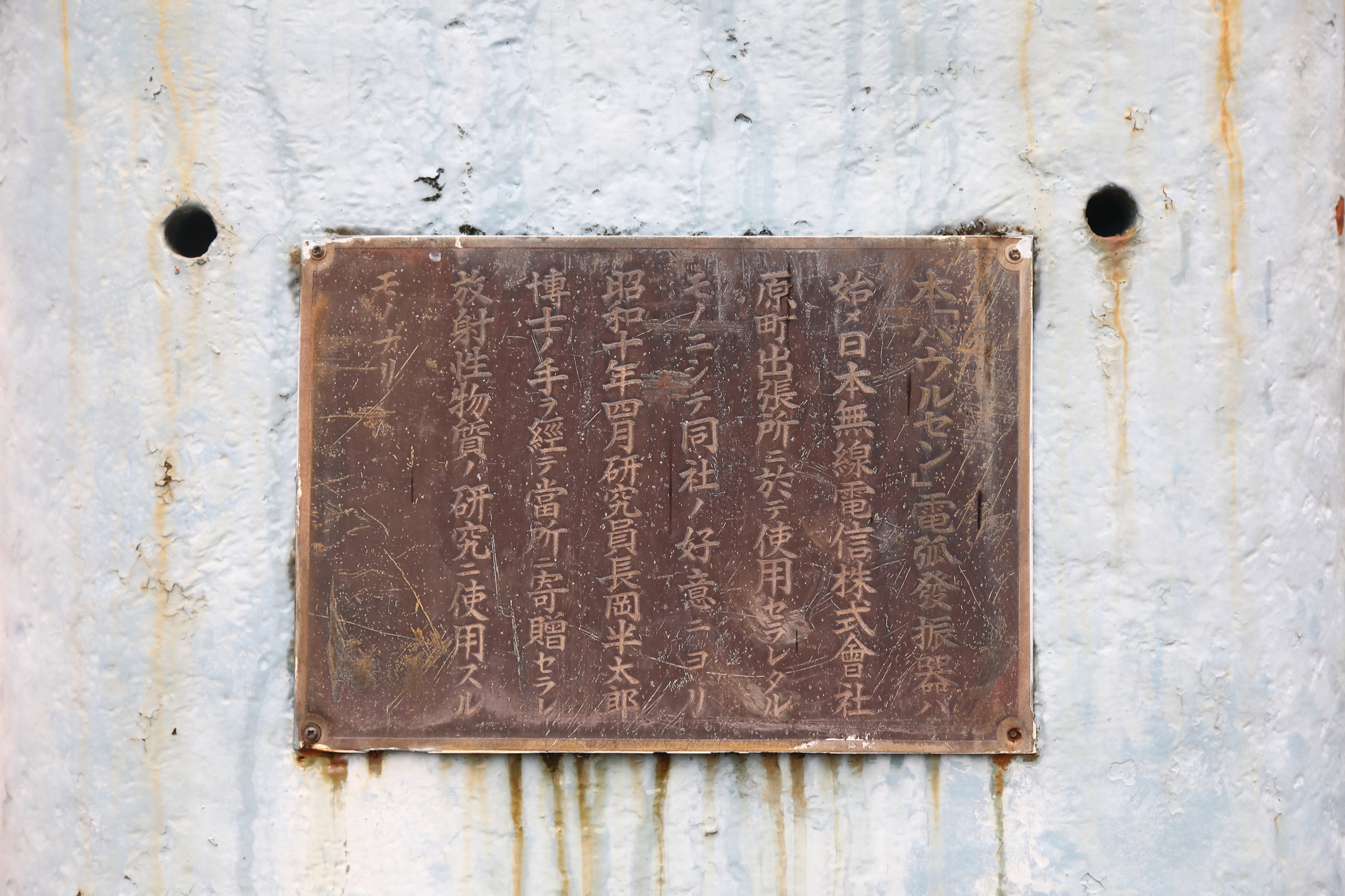
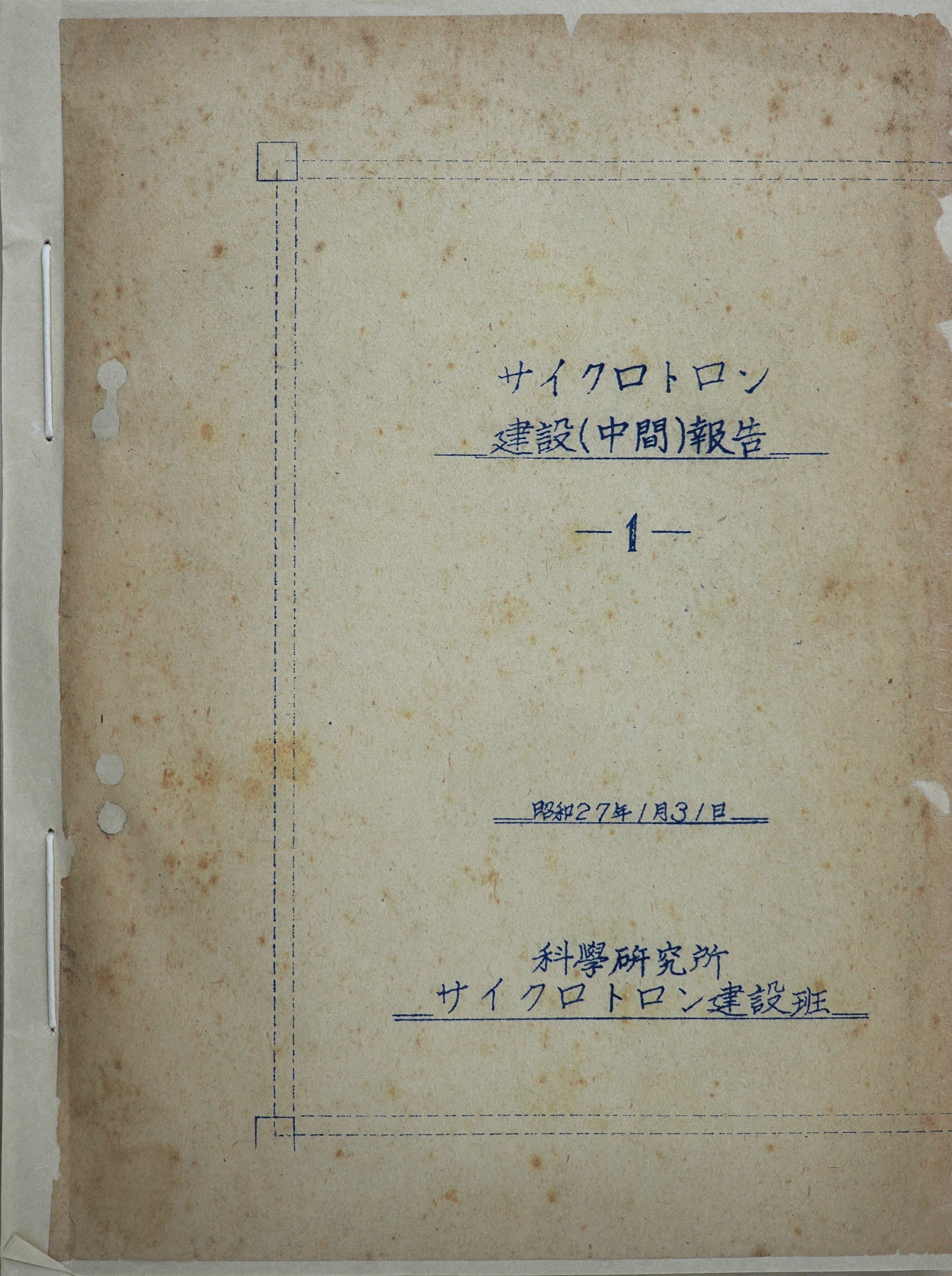
Cyclotron Electromagnet No. 3 (Monument) and Its Design Drawings
Era
1953年
Designation as Cultural Properties, etc.
None in particular
Reasons for Certification
This facility is an accelerator that was rebuilt at the RIKEN Institute after World War II. Its design is virtually identical to that of Accelerator No. 1, which was constructed by Yoshio Nishina and others before the war but was lost during the conflict, and it holds significant academic value. At the same time, it is the facility that enabled Japan to begin full-scale domestic production of artificial radioisotopes in the postwar era, and it is historically significant as a landmark that marked the transition of Japanese accelerator science from the research stage to practical societal applications.
Photographs
Image

Description
Explanation
The history of particle accelerators in Japan began in 1934 when a team led by Bunsaaku Arakatsu at Taipei Imperial University (now National Taiwan University) completed a Cockcroft-Walton-type accelerator and successfully conducted Asia’s first experiment in artificial nuclear transmutation. Meanwhile, it was clear that the method of repeated acceleration was advantageous for obtaining higher-energy particles; the RIKEN Foundation (RIKEN) andwith support from Ernest Lawrence, the developer of the cyclotron, completed a small cyclotron (Unit 1, Japan’s first: 26-inch magnet pole diameter) in 1937 and a large cyclotron (Unit 2, 60-inch magnet pole diameter) in 1943, and continued their research.
Unfortunately, both of the above aircraft were lost during the war. Furthermore, in 1948, RIKEN was dissolved, and its staff was drastically reduced from approximately 1,800 to about 600. Nevertheless, the organization made a fresh start as the Scientific Research Institute Co., Ltd. (Kaken), utilizing its technology to produce radiation dosimeters, vacuum-related equipment, and penicillin.
Yoshio Nishina died in January 1951.It is reported that when Lawrence visited Japan for the first time four months later, upon seeing the remaining electromagnets, he remarked, “With these, all we need is an electromagnet, don’t we?” This visit helped build momentum for the resumption of cyclotron research, which had been suspended since the end of the war. As a result, with grants for industrial technology and other support from the Ministry of International Trade and Industry, construction of the third cyclotron began in December of that year, and it was rebuilt in December 1952.
Although Unit 3 is essentially the same design as Unit 1, several modifications have been made to achieve higher energy and yield. These include changes to the shape of the magnetic poles to generate a higher magnetic field and a reduction in the inner diameter of the accelerating chamber. As a result of these improvements, the energy achieved by Unit 3 reached 3.7 MeV, compared to 3.0 MeV for Unit 1, leading to a significant increase in both RI (radioisotope) and neutron yield.
From this point on, I will discuss the nationwide expansion of radioactive isotope (RI) utilization made possible by Reactor No. 3. After the first shipment of RI produced at a U.S. nuclear reactor was imported in 1950, the Japan Radioisotope Association (now the Japan Isotope Association) was founded in 1951 and began importing and distributing RI.Then, when the long-awaited Unit 3 began operations in December 1953, the distribution of domestically produced RI also commenced, establishing a nationwide system for the supply, utilization, and sharing of RI technology. Facilities utilizing RI spread throughout the country and expanded into various fields such as medicine, biology, agriculture, and industry; technologies involving the use of radiation, such as biological metabolism, nuclear medicine, and mutation breeding, were widely adopted.The Japan Isotope Association’s revenue and expenditure, which stood at approximately 200 million yen in 1957, expanded to 1 billion yen in 1967 and 10 billion yen in 1977. The fact that it subsequently reached 70 billion yen demonstrates that RI, as a new technology, has benefited a large portion of the population.
Unit 3 ceased regular radioisotope (RI) production in September 1959. Although it continued to carry out limited production of extremely short-lived RI, conduct research in radiation physics and biology using neutrons, and provide experimental beam time for physicists, it was shut down and dismantled in April 1970.Key components, such as the electromagnets and yokes, were preserved as monuments, while the other major component—the accelerating chamber—was donated to the National Museum of Nature and Science. The aforementioned monuments were relocated to the RIKEN campus in Wako City in 2021.
Accelerator No. 3 was the first in postwar Japan to establish a full-scale domestic supply of artificial radioisotopes, and it supported the development of radioisotope (RI) applications in Japanese medicine, agriculture, industry, and basic science. Furthermore, its major components and construction records are still preserved at the RIKEN Institute, conveying the technical reality and social role of the facility to this day.The RIKEN No. 3 Cyclotron holds immense historical value as a landmark device that marked the turning point when Japan’s accelerator science evolved from the research stage to practical societal applications.
Location
Location
Public Access
Publication Status
Reactor No. 3, located at the RIKEN Wako Campus, is open to the public for tours upon approval by RIKEN staff. It may also be possible to tour the facility during the public tours and cherry blossom viewing events held approximately twice a year.